


Image by PM Images/Getty Images; Illustration by Hunter Newton/Bankrate
Current mortgage rates
| Loan type | Current | 4 weeks ago | One year ago | 52-week average | 52-week low |
|---|---|---|---|---|---|
| 30-year | 6.27% | 6.10% | 6.76% | 6.50% | 6.09% |
| 15-year | 5.60% | 5.45% | 6.01% | 5.74% | 5.45% |
| 30-year jumbo | 6.36% | 6.22% | 6.87% | 6.58% | 6.22% |
The 30-year fixed mortgages in this week’s survey had an average total of 0.33 discount and origination points. Discount points are a way to lower your mortgage rate, while origination points are fees lenders charge to create, review and process your loan.


Shop smarter for mortgage rates
Bankrate connects you to the latest lender offers, tailored to you. Find your low rate today.
Explore mortgage rates
Monthly mortgage payment at today’s rates
The national median family income for 2025 was $104,200, according to the U.S. Department of Housing and Urban Development (the 2026 estimate has yet to be released), and the median price of an existing home sold in February 2026 was $398,000, according to the National Association of Realtors. Based on a 20% down payment and a 6.27% mortgage rate, the monthly principal and interest payment of $1,965 amounts to about 23% of the typical family’s monthly income.
Meanwhile, home prices have begun to dip in many formerly hot markets. Half of the nation’s 50 largest metro areas exprienced price declines over the past year, Zillow reported in early February. Seperately, the S&P Cotality Case-Shiller index released Feb. 24 showed national home prices grew just 1.3% in 2025. That was the weakest showing since 2011, when prices fell 3.9%.
“With more housing inventory coming online and home prices starting to level off, this remains a promising environment for those looking to buy or refinance,” says Samir Dedhia, CEO of One Real Mortgage.
What will happen to mortgage rates in the rest of 2026?
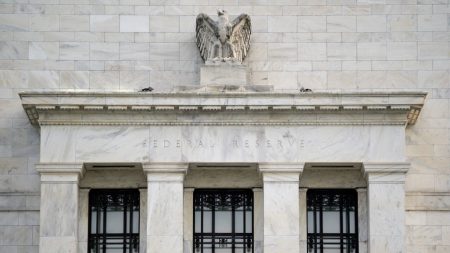
As expected, the Federal Reserve opted to hold its benchmark rate steady at its meeting on March 18. The Fed also released its latest summary of economic projections, indicating one more rate cut by the end of the year. However, rising inflation could change things.
“Mortgage rates have moved up about a quarter percentage point in recent weeks, as longer-term interest rates accounted for the increase in inflation and, hence, the reduction in the chance that Fed would cut further this year,” said Mike Fratantoni, chief economist for the Mortgage Bankers Association, in a statement. “We forecast that mortgage rates will range between 6% and 6.5% this year, and our latest weekly data show it’s trending towards the upper end of that range.”
-
The Bankrate.com national survey of large lenders is conducted weekly. To conduct the National Average survey, Bankrate obtains rate information from the 10 largest banks and thrifts in 10 large U.S. markets. In the Bankrate.com national survey, our Market Analysis team gathers rates and/or yields on banking deposits, loans and mortgages. We’ve conducted this survey in the same manner for more than 30 years, and because it’s consistently done the way it is, it gives an accurate national apples-to-apples comparison. Our rates differ from other national surveys, in particular Freddie Mac’s weekly published rates. Each week Freddie Mac surveys lenders on the rates and points based on first-lien prime conventional conforming home purchase mortgages with a loan-to-value of 80%. “Lenders surveyed each week are a mix of lender types — thrifts, credit unions, commercial banks and mortgage lending companies — is roughly proportional to the level of mortgage business that each type commands nationwide,” according to Freddie Mac.
Why we ask for feedback
Your feedback helps us improve our content and services. It takes less than a minute to
complete.
Your responses are anonymous and will only be used for improving our website.
Help us improve our content
Thank you for your
feedback!
Your input helps us improve our
content and services.
Read the full article here