




The Labor Department is set to release the December consumer price index (CPI) on Tuesday, which is expected to show inflation remaining elevated above the Federal Reserve’s 2% target as data collection disruptions from the government shutdown linger.
The consensus forecast compiled by FactSet estimates that headline inflation rose 0.3% on a monthly basis in December and 2.6% year-over-year, while core inflation, that excludes more volatile food and energy prices, rose 0.26% for the month and 2.6% from the prior year.
Economists are warning that the 43-day government shutdown that ended in mid-November will impact not only the December CPI print, but the CPI inflation data for the next several months.
“This is going to be an extremely muddy report because of the lingering questions around the October and November CPI report,” EY-Parthenon chief economist Greg Daco told FOX Business in an interview. “Most of the data was affected by the government shutdown.”
FURTHER RATE CUTS IN QUESTION AS FED POLICYMAKERS DEEPLY DIVIDED OVER DECEMBER CUT, MINUTES SHOW
Daco said the firm projects that headline and core CPI rose 0.3% on a monthly basis and 2.7% year-over-year in December, with some slight pressure on energy and food prices. He said that there’s an upside risk of inflation coming in at 2.8% due to the uncertainty around the prior months’ readings and the data collection lapse.
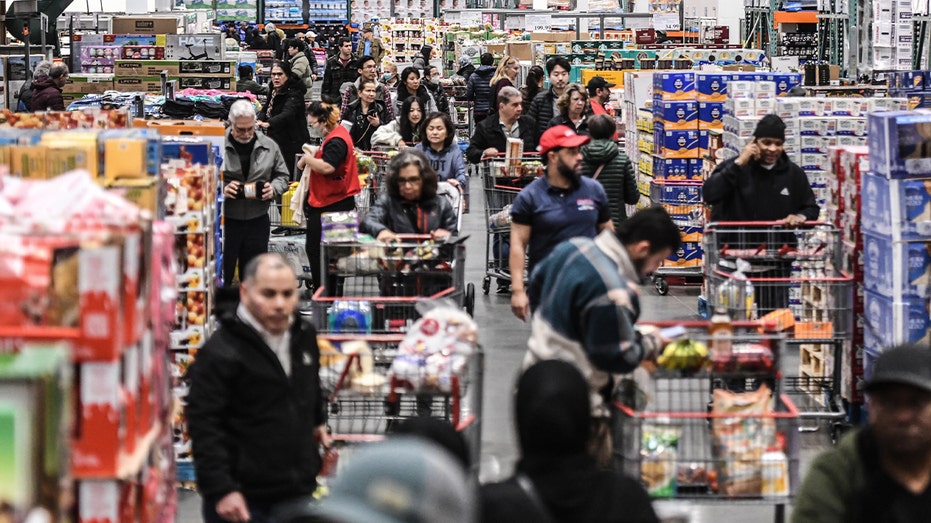
“For most of the price categories, you actually have people going into the stores and measuring prices, and so, as a result of the government shutdown, those surveys were not conducted,” he explained.
“The BLS decided to essentially use what is called a carry-forward methodology which is saying that prices did not change over the course of any given month,” Daco said. “Prices always change, but that was the approximation used which imparted downward bias on inflation dynamics.”
US ECONOMY EXPECTED TO GROW FASTER IN 2026 DESPITE STAGNANT JOB MARKET: GOLDMAN SACHS
He noted that the housing price data from rent and owners’ equivalent rent is an area where the carry-forward methodology’s most problematic bias was on housing, as it implied there was no change between April and October in the housing gauges because the BLS measures it on a six-month rolling basis.
Additionally, the November CPI data was collected in the second half of the month and Daco noted that timing coincides with a period when there is “more discounting around some of the key Black Friday events, so that could’ve imparted a downward bias to the November data itself.”
The data collection issues for the October and November CPI data will “represent a downward bias on inflation through April,” Daco added.
US ECONOMY ADDED 50K JOBS IN DECEMBER AS UNEMPLOYMENT RATE DECLINES
He added that there will be some offset to the downward bias in the inflation data through April, but cautioned that “it’s not going to come all at once” and “it’s very hard to say how quickly we’re going to see an offset from the downward bias implied by the late survey and the carry-forward methodology.”
Oxford Economics also forecasts that headline and core CPI will rise by about 0.3% on a monthly basis in December and warned that “shutdown-related distortions will continue to cloud the signal from the December CPI.”
The firm noted that the November CPI data for apparel and recreation goods were “especially weak” due to the timing of data collection during the holiday discounting season, and that the “[year-over-year] reading of the CPI will still be depressed due to housing.”
“The BLS will continue to print an artificially low level of the CPI for shelter in December, and this downward bias won’t be corrected until April 2026,” Oxford Economics told FOX Business.
Read the full article here


